by Cosima Malandrino | Giu 8, 2018
Source: Sabinet http://blog.sabinet.co.za/2009/09/wireless-user-groups/
| Country |
South Africa |
| City |
Pretoria |
| Name |
Pretoria Wireless User Group |
| Date |
2007 |
| Description of the project |
Pretoria Wireless Users Group is a South African wireless users group. It is non-profit community organisation providing a Wireless community network in Pretoria, the capital of South Africa.
PTAWUG has been created as the community’s answer to South Africa’s restrictive telecommunications environment. The South African telecommunications industry has been marked by poor service delivery, monopolistic practices and prohibitively high prices.
Founded on 28 July 2007, PTAWUG embodies the African spirit of Ubuntu. Its constitution guarantees openness, free participation and equality to all members of the Wireless User Group. PTAWUG is exclusively funded by donations from the community. Highsite installation and maintenance is conducted by volunteers in their spare time. PTAWUG exemplifies the proverbial open source Bazaar – no management team, no hierarchies, equal participation.
PTAWUG is the 3rd largest wireless network organisation in the world, behind AWMN (Greece), TWMN (Greece). These two networks provide internet as well, which PTAWUG doesn’t, so counting community networks that don’t provide internet – PTAWUG is the largest on earth.
The aim of the network is to provide free TCP/IP communications in and around South Africa’s capital to hobbyists, researchers and other non-commercial users. The network is used for gaming, voip, file transfers and various other IP based services.
PTAWUG connects members from vastly different backgrounds and social standings and provides a sandbox for technology experimentation and community skills development. |
| Urban Co-Governance |
Moderate |
| Enabling State |
Weak |
| Pooling |
Moderate |
| Experimentalism |
Moderate |
| Tech Justice |
Strong |
| Project Website |
https://www.revolvy.com/main/index.php?s=Pretoria%20Wireless%20Users%20Group
http://pta.wug.network/ |
| References, sources, contact person(s) |
Pretoria Wireless User Group, South Africa. Sources: Websites
Contact : bloax@ptawug.za.net ; jasweb@ptawug.za.net
|
Pretoria, South Africa
by Chiara De Angelis | Giu 8, 2018
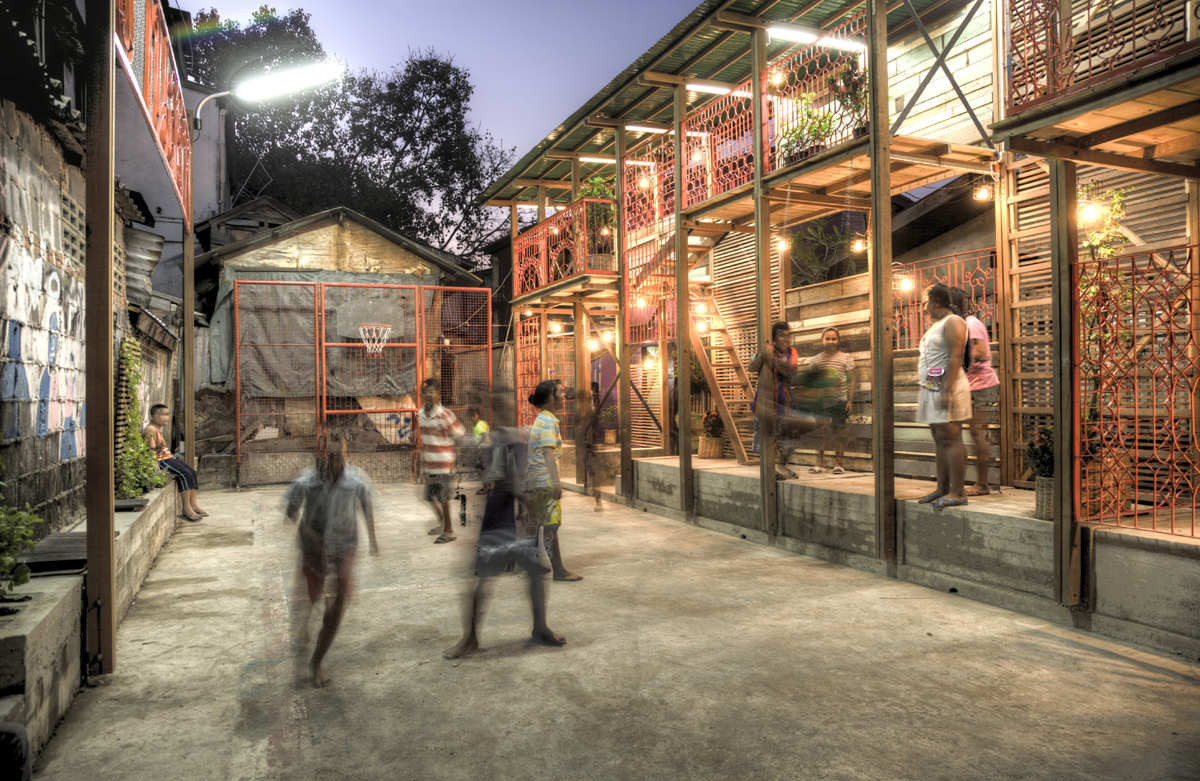
Credits: Picture by © TYIN Tegnestue Architects
| Country |
Thailand |
| City |
Bangkok |
| Name |
Klong Toey Community Lantern |
| Date |
2011 |
| Description |
Klong Toey is currently the largest and oldest areas of informal dwellings in Bangkok. More than 140.000 people is estimated to live here, and most are living in sub-standard houses with few or no tenure rights or support from the government.
The TYIN Tegnestue Architects together with students and the community of Klong Toey and the sponsorship of Link Arkitektur & Ratio Arkitekter have designed and revitalized this public space in the heart of the neighbourhood. In addition to the main function as a football court and a public playground the project will work as a tool for the community to tackle some of the social issues in the area. A crucial factor in the continuation of the project is that the Klong Toey Community Lantern will be part of a long term strategy. This project is part of a development on a larger scale, and it has to be considered as a small contribution that might lead to positive change. With the local connection established both in the local community and a professional network in Thailand the project has greater chances of having a social sustainability.
The year long preparation period allowed the team to design and build the structure in as little as three weeks. During this period the project team got involved with the community through interviews, workshops and public meetings. The design of the structure is a combination of many basic ideas and concepts, and embodies several of the features lacking in the area including new hoops for basketball, a stage for performances or public meetings, walls for climbing and seating both inside and around the edges of the playground. |
| Urban Co-Governance |
Moderate |
| Enabling State |
Moderate |
| Pooling |
Weak |
| Experimentalism |
Moderate |
| Tech Justice |
Weak |
| Website |
http://www.archdaily.com/212214/klong-toey-community-lantern-tyin-tegnestue-architects |
| References, sources, contact person(s) |
Archdaily.com
http://www.tyinarchitects.com/
Contact : Yashar: yashar@agraff.no
Andreas: andreas@fur.no
Ørjan: orjan@fur.no |
bangkok

by Cosima Malandrino | Giu 8, 2018
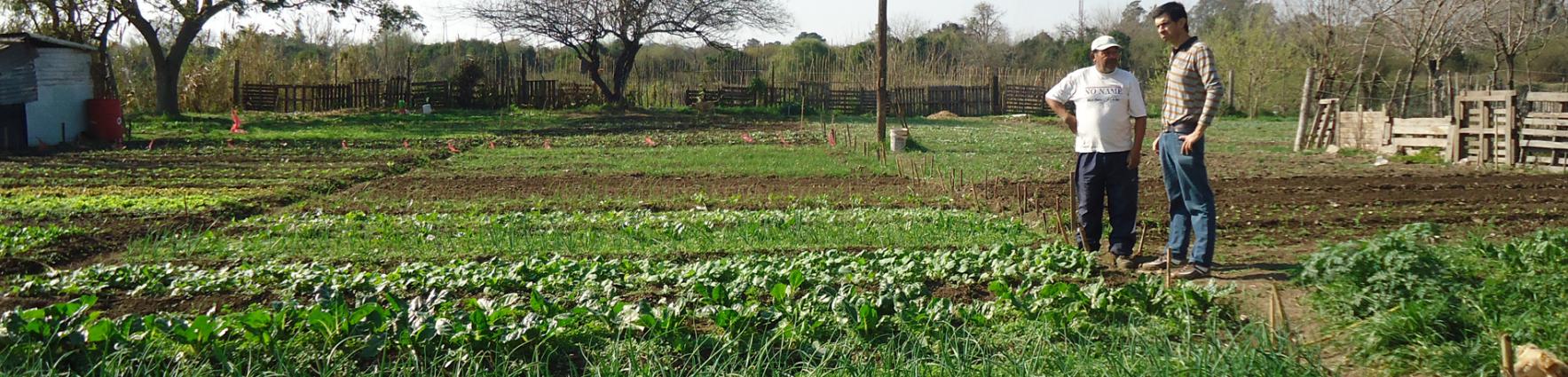 Source: Rosario City Government https://www.rosario.gov.ar/web/ciudad/economia-solidaria/agricultura-urbana
| Country |
Argentina |
| City |
Rosario |
| Name |
Programa de Agricultura Urbana |
| Date |
2002 |
| Description |
Beginning in 2002, the Programa de Agricultura Urbana institutionalized, built upon and expanded some already existing initiatives of urban agriculture on unused plots of land. The policy planned to support families and community members in situation of increasing poverty through the allocation of land to be used for urban farming. The municipality organized the plan in six districts, appointing a technical coordinator and two local support staff in each of them with knowledge of agriculture or gardening in order to assisting the huerteros (the persons tending the huertas). The residents involved have created more than 700 community farms. The food produced is either consumed by the farmers or sold at the farmers markets every week.
This policy helped foster a community spirit and contributed to the socio-economic upheaval of many families in Rosario that were suffering after the 2001 crisis. |
| Urban Co-Governance |
Weak |
| Enabling State |
Moderate |
| Pooling |
Moderate |
| Experimentalism |
Moderate |
| Tech Justice |
Weak |
| Project Website |
https://www.rosario.gov.ar/web/ciudad/economia-solidaria/agricultura-urbana |
| References, sources, contact person(s) |
Programa de Agricoltura Urbana, Rosario Argentina. Sources: website; UCLG https://www.uclg-cisdp.org/sites/default/files/Rosario_2010_en_final.pdf
https://institucional.us.es/revistas/habitat/7/hys%20n07a05.pdf |
Rosario

by Chiara De Angelis | Giu 8, 2018
Credits: Picture of Barangay by www.megacitizens.com
| Country |
Philippines |
| City |
Barangay |
| Name |
Bantay Sangkay: Community Driven Development (CDD) Approach |
| Date |
NA |
| Description |
The project Bantay Sangkay sought to embed social accountability mechanisms , adoption of Community – Driven Development (CDD) approach in local planning and public expenditure management cycle and to enhance participatory processes and gains of Kalahi Cidds (KC) , a Philippine government Anti-Poverty Program. This program aimed to create an involved citizenship into their own development and welfare and this belies the real meaning of a democratic government and sustainable development. In that sense, the objectives of the Bantay Sangkay project were:
1. Continuity of participatory processes and approaches and consolidate the gains into community decision-making; Its major aim was to reach out and involved the marginalized sectors of the community eg. women, out of school youth, farmers and the conflict affected.
2. Adoption of CDD technology into the local governement’s (LGU) local planning and budgeting or the public expenditure management cycle; Development of a Comprehensive Municipal Development Plan based on the consolidated 24 Barangay Development Plans developed thru the Barangay Development Council.
3. Systematize the use of social accountability mechanisms, tools and activities initially developed through the KC towards the setting up of a social accountability system in the LGU (municipal and barangay levels).
4. Utilize a dynamic combination of Top-Down / Bottom-UP Participatory Development Planning Process. The Participatory Situational Analysis (PSA)conducted by the LGU and the community itself and the Community Based Monitoring System (CBMS) were the starting points in community immersion. |
| Urban Co-Governance |
Moderate |
| Enabling State |
Moderate |
| Pooling |
Moderate |
| Experimentalism |
Strong |
| Tech Justice |
Weak |
| Website |
http://participedia.net/en/cases/bantay-sangkay-community-driven-development-cdd-approach |
| References, sources, contact person(s) |
Participedia.net |
barangay

by Chiara De Angelis | Giu 8, 2018
 Credits: picture by http://www.barakabits.com/2015/07/chain-effect-encouraging-sustainable-transport-beirut
| Country |
Lebanon |
| City |
Beirut |
| Name |
The Chain Effect |
| Date |
2014 |
| Description |
The Chain Effect was created in November 2014, by three friends, to promote cycling for mobility in Beirut. Cycling is not viewed as a means of transport in Beirut, and the city is not the most cycle-friendly. However, congestion, is a major issue bearing high costs on the economy, society and the environment, which could be relieved if more people chose alternative means of transport. The Chain Effect wants to generate discussions and provoke people to think about cycling as more than just a sport or leisure activity. Their mission is to promote the bicycle as a sustainable and convenient form of urban mobility and encourage its use in Beirut. They do this through street art, public installations and community projects. |
| Urban Co-Governance |
Moderate |
| Enabling State |
Weak |
| Pooling |
Moderate |
| Experimentalism |
Moderate |
| Tech Justice |
Weak |
| Project Website |
https://www.facebook.com/TheChainEffect/
https://thechaineffect.me/ |
| References, sources, contact person(s) |
https://www.facebook.com/TheChainEffect/
https://thechaineffect.me/
info@thechaineffect.me |
beirut