by test | Jul 26, 2018

Image source: http://co-nyc.commoning.city/item/white-rooftop-project/
New York City
by test | Jul 26, 2018
You watch them play chess on a table. The pieces move, but is that all that is visible? We walk through a park and there is a presence larger than just the greenery and the sight of others walking past us.There are aspects of city life that are invisible, marked by the contours of the city, but ephemeral, inchoate, malleable, capable of much change. One of these aspects of city life is the spaces and resources that are shared by city residents, where it is hard to exclude others from such sharing. These sorts of spaces are the commons, and cities and city life depend on them greatly. Parks, rivers, greenways, community gardens, bike lanes, chess tables, even bus stops, are obvious examples. But even more private spaces offer a sense of the commons, such as the excitement and intensity of social life in a street market, or a cafe.
There are aspects of city life that are invisible, marked by the contours of the city, but ephemeral, inchoate, malleable, capable of much change. One of these aspects of city life is the spaces and resources that are shared by city residents, where it is hard to exclude others from such sharing. These sorts of spaces are the commons, and cities and city life depend on them greatly. Parks, rivers, greenways, community gardens, bike lanes, chess tables, even bus stops, are obvious examples. But even more private spaces offer a sense of the commons, such as the excitement and intensity of social life in a street market, or a cafe.The commons rely on the invisible to make the visible valuable. In this sense, a park is not simply the addition of greenery with families, pedestrians, dogs, and strollers. It is the social practices that enmesh and weave together the way this commons is used. Without these invisible
The commons rely on the invisible to make the visible valuable. In this sense, a park is not simply the addition of greenery with families, pedestrians, dogs, and strollers. It is the social practices that enmesh and weave together the way this commons is used. Without these invisible infrastructure the commons would not exist. In general, parks discourage litter. People using the park try to accommodate one another (even in a city as busy and impersonal as New York City). Different uses aggregate into shared practices– rollerblading, bicycling, sitting on a bench, playing chess…
Recognizing the invisible then, ultimately, is a call to respect the mysterious and many ways that we, in cities recognize and adapt to each other. But it is not only this heeding of the other– it is also an opportunity to make the invisible a basis for further sharing, so that slowly layers of urban life are gradually uncovered, and further shared among all of us who inhabit these spaces.

by test | Jul 26, 2018
 Image source: https://www.facebook.com/brooklynbridgepark
| Country |
United States |
| City |
New York City |
| Name |
Brooklyn Bridge Park |
| Date |
1984 |
| Description of the project |
Brooklyn Bridge Park is not like other city parks. It exists only because of an extensive planning and community advocacy and it operates through a hybrid public-private model. After the close of its cargo operations in 1984, the plan was to sell that area for commercial development, but not-for-profit organization Friends of Fulton Ferry Landing fought for space and conceived the idea of the park.
A continuation of this battle is the constant conflict among private development and plans to establish affordable housing, which continues to divide neighbors and neighborhood associations. |
| Urban Co-Governance |
|
| Enabling State |
|
| Pooling |
|
| Experimentalism |
|
| Tech Justice |
|
| Project Website |
https://www.brooklynbridgepark.org/ |
| References, sources, contact person(s) |
Contact : https://www.brooklynbridgepark.org/about/contact-us/
https://www.facebook.com/brooklynbridgepark |
334 Furman St, Brooklyn, NY 11201

by test | Jul 26, 2018

Image source: http://co-nyc.commoning.city/item/east-river-greenway/
| Country |
United States |
| City |
New York City |
| Name |
East River Greenway |
| Date |
2017 |
| Description of the project |
Manhattan’s East Side waterfront is the result of real estate deals, park restorations, reclaimed piers and construction of new esplanades.
It is “an important open space resource for the city, providing access to the shoreline for a variety of activities, integrating larger parks within a connected network, and providing a bike path for recreation and commuting. This is an opportunity to create public open space, providing residents in some of Manhattan’s most densely populated neighborhoods with improved access to the city’s waterfront. When complete, the 32.5-mile Greenway loop will connect a network of green spaces totaling more than 1,000 acres—a space larger than Central Park—running continuously around the entire island. Joggers, walkers, cyclists, and people of varying ages and abilities from every neighborhood should have access to the Greenway that is designed within the context of each unique neighborhood.” (website) |
| Urban Co-Governance |
|
| Enabling State |
|
| Pooling |
|
| Experimentalism |
|
| Tech Justice |
|
| Project Website |
https://edc.nyc/project/manhattan-waterfront-greenway |
| References, sources, contact person(s) |
http://co-nyc.commoning.city/item/east-river-greenway/
Facebook page : https://www.facebook.com/NYCEDC
Contact : EastMidtownWaterfront@edc.nyc |
East River Greenway
by test | Jul 26, 2018
| Country |
United States |
| City |
New York City |
| Name |
Museum of Reclaimed Urban Space |
| Date |
|
| Description of the project |
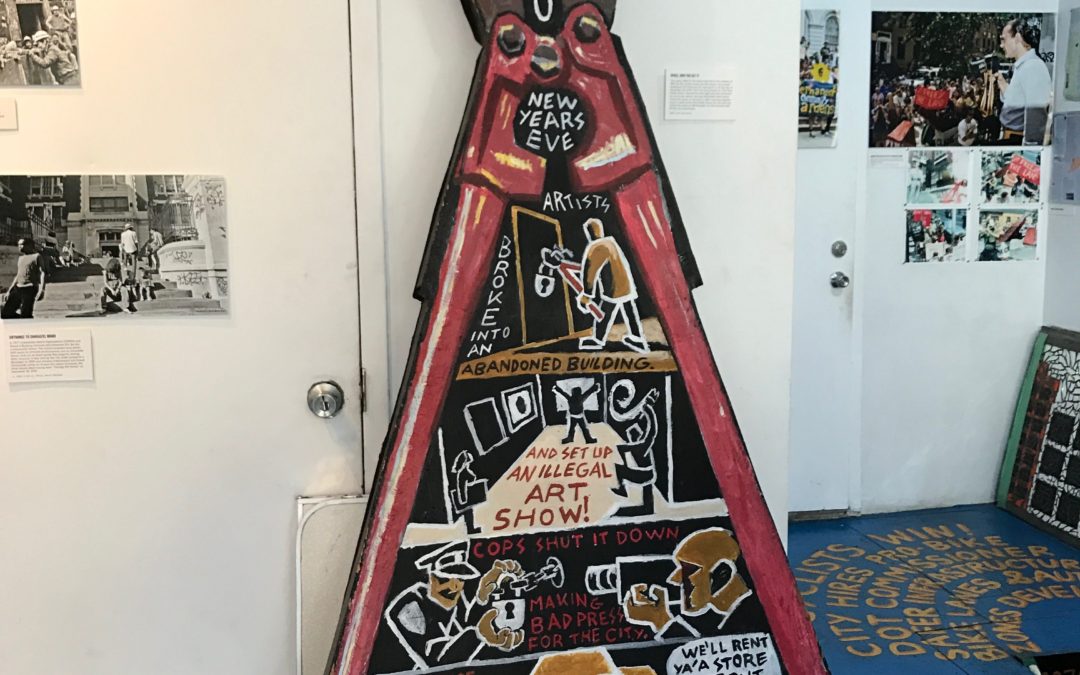
The Museum of Reclaimed Urban Space is located on Avenue C, between East 9th and 10th Avenues. The Museum serves as an archive, documenting the history of activism in the Lower East Side, East Village, and Alphabet City. Through its exhibitions, community workshops, and guided tours of the neighborhood, the Museum preserves the history of grassroots activism and promotes environmentally-sound, community-based urban ecologies. The Museum of Reclaimed Urban Space celebrates local activists who transformed abandoned buildings and vacant lots into vibrant community spaces and gardens. Many of the neighborhoods’ innovative, environmentally sustainable concepts have spread to other parts of New York City, and the rest of the world. |
| Urban Co-Governance |
|
| Enabling State |
|
| Pooling |
|
| Experimentalism |
|
| Tech Justice |
|
| Project Website |
http://www.morusnyc.org/ |
| References, sources, contact person(s) |
|
155 Avenue C, New York, NY 10009