by Staff | Ago 15, 2019
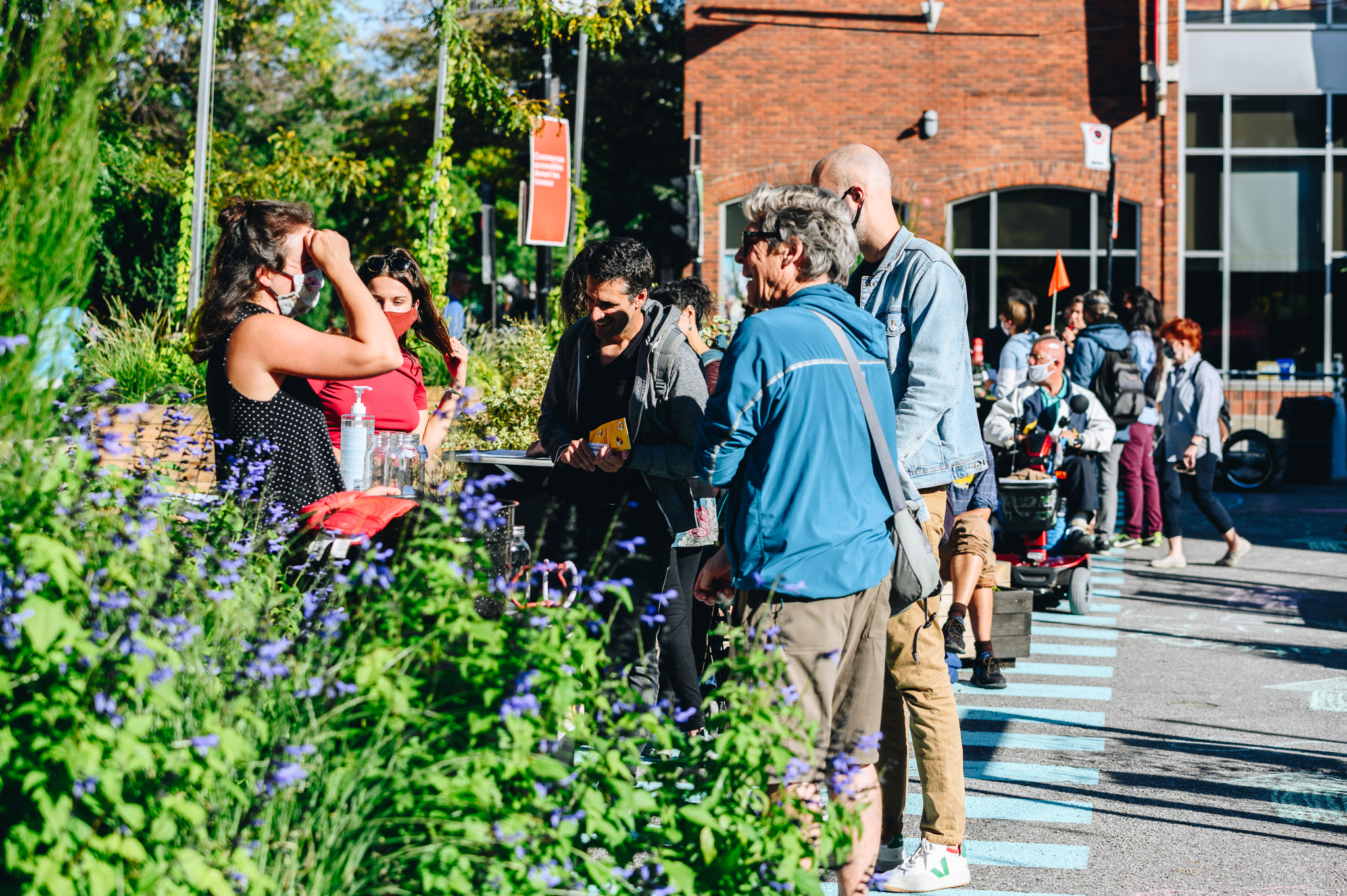

Image source: https://solon-collectif.org/
| Country |
Canada |
| City |
Montréal |
| Name |
Solon Collectif |
| Date |
2015 |
| Description of the project |
Solon Collectif is a non-profit collective based in Montreal which aims at supporting citizens in constructing and leading projects whilst providing them with methodological and technical tools and proposing incubation processes.
It started with street cleaning and evolved into a collective which is now part of the Coop Carbon, a cooperative supporting firms and collectivities in reducing carbon emisisons.
Among the many projects, Solon Collectif is undertaking a project on mobility sharing, intitled Locomotion, focused on energy reduction through a heat transfer fluid circulating in underground pipes called Celsius, and which has received the support of the Arrondissement Rosemont, of the city and of the Ministry of Economy, Science and Innovation. Another project is CO-PO, a community based project which aims to give more access to local fruit and vegetables through local canning with the idea to reduce waste, reinforce the local fabric and promote healthy food. |
| Urban Co-Governance |
Strong |
| Enabling State |
Strong |
| Pooling |
Strong |
| Experimentalism |
Strong |
| Tech Justice |
Moderate |
| Project Website |
https://solon-collectif.org/ |
| References, sources, contact person(s) |
https://solon-collectif.org/
Interview
Contact : info @ solon-collectif.org |
Montréal

by Staff | Ago 15, 2019
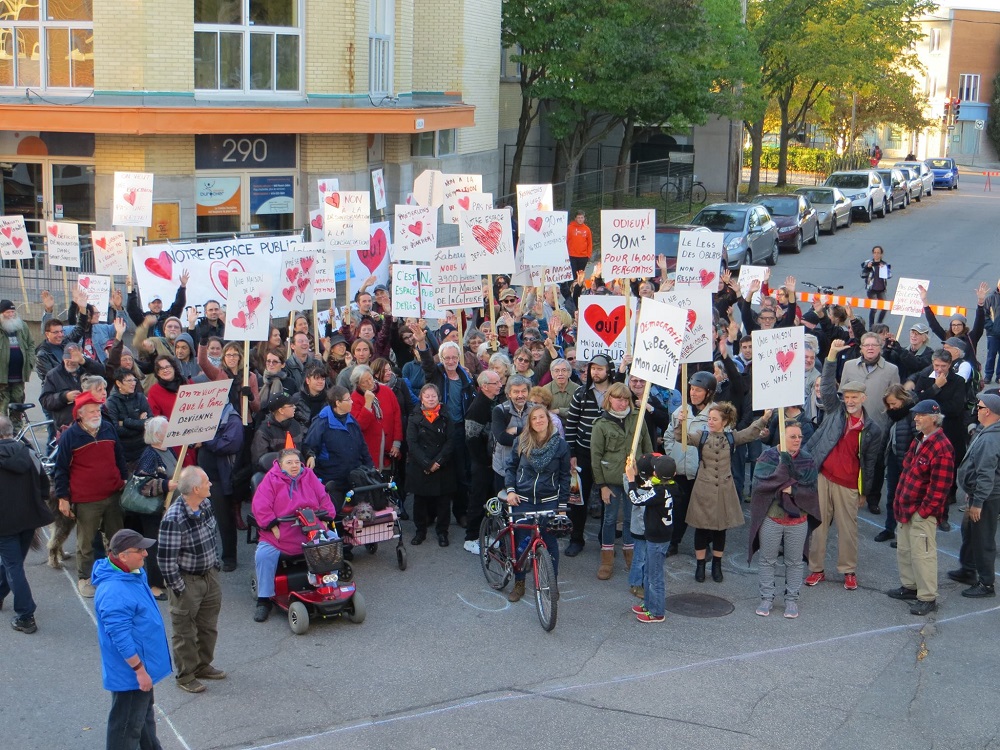 Image source: https://cccqss.org/
| Country |
Canada |
| City |
Québec |
| Name |
CCCQSS- Comité des citoyens et citoyennes du Quartier Saint Sauveur. |
| Date |
1969 |
| Description of the project |
The committee was born in 1969 with many projects in line including the creation of a parc or of social housing. Today it addresses issues including housing, life quality, urban planning, or fight against poverty and social exclusion.
The current project initiators notably of the Sustainable Mobility plan of the Neighborhood were trained at the “centre d’economie urbaine de Montreal”, which mainly helped to quantify the difficulties, to help in more technical issues and to create statistics, audits of pedestrian capacity.
The committee works along with 16 other organisms, follow up committees, there is also more and more interest in greening. They collaborate with community organizations, public sector, and the private sector is mainly represented by local shops and non-profit organizations (e.g. Nature Québec). The committee has worked with the Laval University. Citizens get involved in activities organised by the committee such as local markets, neighborhood newspaper, community life, round tables and are part of the ‘Action Culture Saint Sauveur’. |
| Urban Co-Governance |
Moderate |
| Enabling State |
Weak |
| Pooling |
Strong |
| Experimentalism |
Weak |
| Tech Justice |
Weak |
| Project Website |
https://cccqss.org/ |
| References, sources, contact person(s) |
Interview, website
Contact : info@cccqss.org |
Québec

by Staff | Ago 14, 2019
 Image source : https://espacestemps.ca/
| Country |
Canada |
| City |
Montreal |
| Name |
Espaces Temps |
| Date |
2009 |
| Description of the project |
Espaces temps is a not-for-profit social economy enterprise founded in Montreal in 2009. It supports municipalities, universities, cultural venues and other organizations to carry out innovative and “human centered” projects and provides insight on design thinking. Most of the funding comes from this consulting activity, from which they generate a surplus that enable them to finance autonomous initiatives with social impact. The enterprise imagines and activates complex projects while mobilizing the partners at the right time and gathers the necessary expertise and skills (including including graphic design, art direction, illustration, communications, programming, information architecture, industrial design, architecture, town planning, spatial planning, publishing, journalism, animation of co-design workshops, real estate management , financing, market analysis) for their implementation. Besides acting as a consultant, Espaces Temps also sets up and develops its own projects. |
| Urban Co-Governance |
Strong |
| Enabling State |
Strong |
| Pooling |
Moderate |
| Experimentalism |
Moderate |
| Tech Justice |
Strong |
| Website |
http://espacestemps.ca/a-propos/ |
| References, sources, contact person(s) |
Interview, website http://espacestemps.ca/a-propos/
Contact : info@espacestemps.ca |
Montréal

by Staff | Ago 14, 2019

Image source: https://landemtl.com/portfolio/larpent-vert-demarche-citoyenne/
| Country |
Canada |
| City |
Montreal |
| Name |
Lande |
| Date |
2015 |
|
Description of the project
|
Lande collaborates with community organizations and individual entrepreneurs based on the shared responsibility principle. Lande members work along with multiple non-profit organization for the greening (Sentier urbain), but also also with Solon Collectif, La Pépinière, or the Centre d’économie urbaine. Local organisation “eco quartiers” provide for compost bins. The public sector is represented by the arrondissement and the city of Montreal.
The initiative developed into a business with people From its first year of existence in 2015, the purpose of Lande is to support citizens in the appropriation of vacant land in a three steps process “mapping, supporting, transforming”. The first tool provided is indeed a map online on which they can localize the land. When Lande sees a growing interest for one specific land, a billboard is installed on the vacant land to affirm the intention of appripriation. They put in relation designer and gardeners and others local structures/organisations with people to help them in accomplishing their idea and wishes. The role of Lande members, mainly volunteers, is to facilitate the process, delegating the tasks, providing tools, advising on the negociation process and adapting their support to each citizen/community/organisation specific request. Empowering is Lande’s key mission. Among the main roadblock faced are: the contact with private owners when the land is private is usually difficult as it appears necessary to gain his/her confidence (hence the preference for public land). They use many entry points to mobilise people, community gardens, community spaces more generally. |
| Urban Co-Governance |
Strong |
| Enabling State |
Strong |
| Pooling |
Strong |
| Experimentalism |
Moderate |
| Tech Justice |
Moderate |
| Website |
https://landemtl.com/ |
| References, sources, contact person(s) |
Questionnaire,
Site https://landemtl.com/portfolio/larpent-vert-demarche-citoyenne/Contact : info@landemtl.com |
Montréal

by Chiara De Angelis | Giu 8, 2018
| Country |
South Africa |
| City |
Bergrivier |
| Name |
Flow |
| Date |
2012 |
| Description of the project |
The FLOW Project is currently going through a transition process from research project (it was born as a two-years project at Cape Town University) to independent entity, having as a main aim the facilitation of the “commons transition”. The project is active in three areas of SouthAfrica: the local Municipality of Bergrivier, the city of Kokstad and the suburb of Bo-Kaap. In Bergrivier, FLOW has developed the Climate Change Adaption Plan. The project involves the local unoccipied youth – the FLOW Ambassadors – to build individual and community capabilities in order to stimulate growth and to produce innovation in the fields of climate change, exploitation of resources and inequality |
| Urban Co-Governance |
Strong |
| Enabling State |
Strong |
| Pooling |
Moderate |
| Experimentalism |
Moderate |
| Tech Justice |
Moderate |
| Project Website |
http://www.flowafrica.org |
| References, sources, contact person(s) |
Interview to Anna Cowen and John Ziniades (co-founders of the FLOW project); website
info@flowafrica.org |