by Staff | Apr 14, 2022

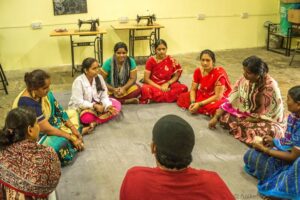
Images Credits : chfindiafoundation.org
| Country |
India |
| City |
Koregaon Bhima, Maharashtra |
| Name |
Community-led solid Waste management – Koregaoni |
| Date |
2016 |
| Description of the project |
CHF initiated its project on community-led solid waste management with the goal of to providing a simple, sustainable and natural method of composting.
Some of the project’s components are : building a recycling/composting unit, recruitment and training of community leaders, and finally, waste collection and composting. CHF installed electricity and drinking water in each unit, provided free by the local government. CHF initially tried to use existing buildings as recycling units, it proved easier to get land from the local government to construct a whole new building.
The project started with the formation of a committee of women in each community who will be responsible for managing the entire project. CHF conducts capacity building activities for these recruits, who then lead awareness activities in their communities to discuss solid waste management. Waste collectors are also recruited within the communities, and paid for their work. Besides, the project currently charges user fees of INR 100 per household to pay waste collectors and for repairs and maintenance of the recycling unit. Finally, the community project leaders take the initiative to speak to visiting bureaucrats or other officials to explain the value of the project.
The efforts made by CHF in capacity building, training and construction of a composting unit proved sustainable even without corporation funding and CHF participation. |
| Urban Co-Governance |
Strong |
| Enabling State |
Moderate |
| Pooling |
Moderate |
| Experimentalism |
Weak |
| Tech Justice |
Weak |
| Project Website |
https://chfindiafoundation.org/index.html |
| References, sources, contact person(s) |
CHF annual reports found here: http://www.chfindiafoundation.org/about-us.html ;
Interview.
Contact : info@chfindiafoundation.org |

by Staff | Apr 13, 2022
Image credit : https://jerusaleminstitute.org
| Country |
Israel |
| City |
Holon |
| Name |
Urban Sustainability – Holon |
| Date |
2013 |
| Description of the project |
Urban Sustainability starts out from a now-widely recognized understanding that, despite increased resource efficiency in production processes and the promotion of pro-environmental products, the world is still far from attaining the targets necessary for the protection of planetary ecosystems for future generations.
In this context, “Urban Labs” have been launched to go from theory to practices. They are local pilots aimed at mapping the opportunities and barriers in realizing the sustainable city vision as it was defined in the first part of the project. Through field research and experimentation, the Urban Labs explore the potential for behavioural changes towards a more sustainable lifestyle, by looking at topics of the Sharing Economy, Local Economy, Transportation, Waste Separation, Community, and Design.
At the end of 2014 (the second year of the project), we talked about the fact that the labs came into being in order to examine, on the local/practical scale, the topics and ideas brought up at the theoretical background stage of the project.
The urban Lab in Holon works especially on issues related to local and sharing economy. |
| Urban Co-Governance |
Strong |
| Enabling State |
Moderate |
| Pooling |
Weak |
| Experimentalism |
Strong |
| Tech Justice |
Weak |
| Project Website |
https://jerusaleminstitute.org.il/en/projects/urban-sustainability/ |
| References, sources, contact person(s) |
Interview (Jerusalem Institute for Policy Research, and Jerusalem Municipality) , website
info@jerusaleminstitute.org.il |
by Staff | Apr 13, 2022
Image credit : https://jerusaleminstitute.org
| Country |
Israel |
| City |
Ashdod |
| Name |
Urban Sustainability – Ashdod |
| Date |
2013 |
| Description of the project |
Urban Sustainability starts out from a now-widely recognized understanding that, despite increased resource efficiency in production processes and the promotion of pro-environmental products, the world is still far from attaining the targets necessary for the protection of planetary ecosystems for future generations.
In this context, “Urban Labs” have been launched to go from theory to practices. They are local pilots aimed at mapping the opportunities and barriers in realizing the sustainable city vision as it was defined in the first part of the project. Through field research and experimentation, the Urban Labs explore the potential for behavioural changes towards a more sustainable lifestyle, by looking at topics of the Sharing Economy, Local Economy, Transportation, Waste Separation, Community, and Design.
At the end of 2014 (the second year of the project), we talked about the fact that the labs came into being in order to examine, on the local/practical scale, the topics and ideas brought up at the theoretical background stage of the project.
The urban Lab in Ashdod works on
1) Community’s role in promoting waste management.
2) Promotion of a transition to more sustainable means of commuting to work among employees of the Municipality |
| Urban Co-Governance |
Moderate |
| Enabling State |
Moderate |
| Pooling |
Weak |
| Experimentalism |
Moderate |
| Tech Justice |
Weak |
| Project Website |
https://jerusaleminstitute.org.il/en/projects/urban-sustainability/ |
| References, sources, contact person(s) |
Interview (Jerusalem Institute for Policy Research, and Jerusalem Municipality) , website
info@jerusaleminstitute.org.il |
by Staff | Apr 13, 2022
Image credit : https://jerusaleminstitute.org
| Country |
Israel |
| City |
Acre |
| Name |
Urban Sustainability – Acre |
| Date |
2013 |
| Description of the project |
Urban Sustainability starts out from a now-widely recognized understanding that, despite increased resource efficiency in production processes and the promotion of pro-environmental products, the world is still far from attaining the targets necessary for the protection of planetary ecosystems for future generations.
In this context, “Urban Labs” have been launched to go from theory to practices. They are local pilots aimed at mapping the opportunities and barriers in realizing the sustainable city vision as it was defined in the first part of the project. Through field research and experimentation, the Urban Labs explore the potential for behavioural changes towards a more sustainable lifestyle, by looking at topics of the Sharing Economy, Local Economy, Transportation, Waste Separation, Community, and Design.
At the end of 2014 (the second year of the project), we talked about the fact that the labs came into being in order to examine, on the local/practical scale, the topics and ideas brought up at the theoretical background stage of the project.
The urban Lab in Acre leads conducts tests about the ability of urban design to promote a sustainable lifestyle. |
| Urban Co-Governance |
Strong |
| Enabling State |
Moderate |
| Pooling |
Weak |
| Experimentalism |
Strong |
| Tech Justice |
Weak |
| Project Website |
https://jerusaleminstitute.org.il/en/projects/urban-sustainability/ |
| References, sources, contact person(s) |
Interview (Jerusalem Institute for Policy Research, and Jerusalem Municipality) , website
info@jerusaleminstitute.org.il |

by Staff | Apr 13, 2022
Image credit : https://www.midorifarm.net/home-en
| Country |
Japan |
| City |
Kyoto |
| Name |
Midori Farm |
| Date |
Around 2008 |
| Description of the project |
“We are a community-oriented organization based in Kyoto city with farms in Keihoku, Kyoto and Kutsuki, Shiga. Our mission is to revive farmland and rural areas through organic farming, educational events and tours. We are striving to bring back the traditional food system to restore the health and environment of Japan. With all the crises we face worldwide, Midori Farm provides opportunities for people to get involved and bring about real changes.” (Website)
Midori Farm provides opportunities for people to try organic farming as well as work regularly on a farm. Also, through events and volunteer programs, people from anywhere can come to the mountains of Kutsuki, experience the beautiful nature, and visit the farm. Furthermore, with the Teikei (Community Support Agriculture) System and events in Kyoto city, Kyoto-ites can interact and connect with the countryside that surrounds them. |
| Urban Co-Governance |
Moderate |
| Enabling State |
Weak |
| Pooling |
Strong |
| Experimentalism |
Moderate |
| Tech Justice |
Weak |
| Project Website |
https://www.midorifarm.net/home-en |
| References, sources, contact person(s) |
https://www.midorifarm.net/home-en
Interview of Chuck Kayser, Midori Fram founder.
Contact : https://www.midorifarm.net/contact-usjp |