by Chiara De Angelis | Jun 8, 2018
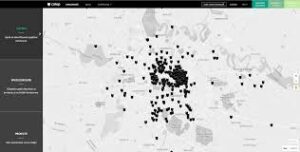 Image source : http://beta.calup.ro/en/the_project
| Country |
Romania |
| City |
Bucharest |
| Name |
Calup |
| Date |
2012 |
| Description |
The initiative emerged in 2012, from the need of an interdisciplinary group to find a common space for daily activities, cultural and collective events. In this search we discovered a significant number of unused spaces, absent from the map of city activities. To draw attention to their potential, we started CALUP for developing solutions to reuse vacant buildings, working with local challenges in the current economic context.
Projects like Dark Matters, Antumbra or Paralel Worlds are some of the initiatives that have relied on the potential reuse of existing structures. By promoting pop-up activities, we have reinstated unused historic buildings, highlighting their economic and cultural potential.
Discovering in vacant spaces a resource with significant potential for improving the quality of urban life, we started collecting information on their number, location and legal situation. In May 2015 calup.ro beta platform was launched, which allows collaborative listing of unused spaces in Bucharest in the form of an online database. Its purpose is to facilitate their reactivation through innovative projects and ideas, which highlight both their importance for local communities and their potential role in the sustainable development of the city. |
| Urban Co-Governance |
Moderate |
| Enabling State |
Moderate |
| Pooling |
Moderate |
| Experimentalism |
Strong |
| Tech Justice |
Strong |
| Website |
http://beta.calup.ro/en/the_project |
| References, sources, contact person(s) |
Beta website
Contact : contact@calup.ro |
brussels

by Chiara De Angelis | Jun 8, 2018
 Image source : http://gasap.be
| Country |
Belgium |
| City |
Brussels |
| Name |
GASAP |
| Date |
2006 |
| Description of the project |
The ‘GASAP’ (‘Solidarity Purchasing Groups for Peasant Agriculture’) is active in the Brussels-Capital Region (BCR) since 2006. The GASAP is a Community Supported Agriculture movement linking consumers directly with producers. Throughout the years, the GASAP has experienced a considerable development, counting nowadays over 90 consumer-producer groups scattered in the Brussels-Capital Region and the neighbouring territory. Each group links 15 to 20 households, sometimes even more, to one or more producers.
Considering its horizontal and bottom-up type of organization, the typical agents composing the GASAP are the consumers and the producers themselves. Due to the often spontaneous and informal manner by which new GASAP groups are created, not every participant is an actual member of the GASAP network. Becoming a member encompasses practical as well as symbolic aspects. Practical aspects include the right to vote at the general assembly anmore recently, the requirement of paying a membership fee; symbolic aspects encompass the embracement of the GASAP’s values, expressed in its principles, as well as in its political and societal objectives |
| Urban Co-Governance |
|
| Enabling State |
|
| Pooling |
|
| Experimentalism |
|
| Tech Justice |
|
| Project Website |
http://gasap.be |
| References, sources, contact person(s) |
Website, paper from Alessandra Manganelli and Frank Moulaert
https://www.iasc2017.org/wp-content/uploads/2017/06/4B_Alessandra-Manganelli.pdf
https://brussels-express.eu/gasap-the-citizens-initiative-that-supports-peasant-agriculture/
Contact : francoise@gasap.be |
Brussels

by Chiara De Angelis | Jun 8, 2018
| Country |
India |
| City |
Bangalore |
| Name |
Janaagraha Centre for Citizenship and Democracy |
| Date |
2001 |
| Description |
Janaagraha Centre for Citizenship and Democracy is a non-profit organisation based in Bangalore, India. They aim to improve quality of life in urban India, through systemic change. Janaagraha sees ‘quality of life’ as comprising two distinct, but interrelated aspects – ‘quality of urban infrastructure and services’ (the quality of urban amenities such as roads, drains, traffic, transport, water supply etc.) and ‘quality of citizenship’ (the role that urban citizens play by participating in their local communities). They work with both citizens and government to catalyse civic participation from the grassroots up, as well as governance reforms from the top down.
Founded in 2001 by Ramesh Ramanathan and Swati Ramanathan, Janaagraha started as a movement to enable citizen participation in public governance.It has now evolved into a robust institution for Citizenship and Democracy. |
| Urban Co-Governance |
Moderate |
| Enabling State |
Moderate |
| Pooling |
Moderate |
| Experimentalism |
Strong |
| Tech Justice |
Strong |
| Project Website |
http://www.janaagraha.org |
| References, sources, contact person(s) |
Questionnaire, Website (http://www.janaagraha.org)
Facebook page : Janaagraha Centre for Citizenship and Democracy | Facebook
Contact : janaagraha@gmail.com |


OLYMPUS DIGITAL CAMERA

by Chiara De Angelis | Jun 8, 2018
| Country |
South Africa |
| City |
Cape Town |
| Name |
Cape Town Wireless User Group |
| Date |
2005 |
| Description of the project |
The Cape Town Wireless User Group started in 2005 as the brainchild of a group of friends in Cape Town, South Africa and it now reaches over 1500 community members. It is a community based not for profit wireless network in Cape Town, which aims at promoting the use and understanding of wireless equipment as well as providing an open wifi network for the whole city.
CTWUG is also a learning experience for every new user who learns by joining and setting up a node.
How does it work?
As the website explain, the CTWUG network works much like a small version of the internet. Many houses, buildings and high sites make up a mesh of interconnected nodes able to pass traffic along to the next, making it possible to connect all nodes on the network.
The website of the organization also helps its community members thanks to a chat and an online forum . |
| Urban Co-Governance |
Moderate |
| Enabling State |
Moderate |
| Pooling |
Moderate |
| Experimentalism |
Weak |
| Tech Justice |
Strong |
| Project Website |
https://ctwug.za.net/ |
| References, sources, contact person(s) |
Wikipedia page here.
Contact : committee@ctwug.za.net |
Cape town

by Chiara De Angelis | Jun 8, 2018
Credits: COPYRIGHT © 2015 HK FARM.
| Country |
China |
| City |
Hong Kong |
| Name |
HK Farm |
| Date |
2012 |
| Description |
HK Farm grows local and organic food on Hong Kong rooftops. It was created by a designer, archivist and photographer in March 2012. These creative backgrounds have influenced an urban agricultura direction that is honest, unpredictable, tangible and self-sufficient. Their work is multidisciplinary, environmentally charged and contextual to Hong Kong’s urban environment. Similar to the crops grown on their rooftop and fertilized by resources found in the city, they work in a challenging environment, drawing their inspiration from the city and from the communities they work with |
| Urban Co-Governance |
Moderate |
| Enabling State |
Moderate |
| Pooling |
Moderate |
| Experimentalism |
Weak |
| Tech Justice |
Weak |
| Project Website |
http://www.hkfarm.org/community.html |
| References, sources, contact person(s) |
Institutional website
Contact :
|
hong kong