by Chiara De Angelis | Jun 8, 2018
 Image source: https://www.lab4city.org/laboratorio-para-la-ciudad.html
| Country |
Mexico |
| City |
Mexico City |
| Name |
Laboratorio para la Ciudad |
| Date |
2013 |
| Description of the project |
The Laboratorio para la Ciudad is a publicly funded innovation lab that connects the City government of Mexico City with citizens, researchers and tech experts. It is an open space where new creative ideas for the future of the cities are developed through workshops, conferences, and collaboration with civil society. The Lab creates civic innovation experiments involving community members and experts to improve the city services and the accountability of the the city administration, with the aim of crafting a more open and participatory governance model. |
| Urban Co-Governance |
Moderate |
| Enabling State |
Strong |
| Pooling |
Moderate |
| Experimentalism |
Strong |
| Tech Justice |
Moderate |
| Project Website |
https://labcd.mx/ |
| References, sources, contact person(s) |
Interview, Lab gov studies, websites
Contact : laboratorio@labcd.mx |
Mexico City

by Chiara De Angelis | Jun 8, 2018

Credits: Image from http://www.percolab.com/en/percolab-portfolio/ecto-cooperative-coworking-space/
| Country |
Canada |
| City |
Montreal |
| Name |
ECTO | coworking coopératif |
| Date |
2009 |
| Description |
ECTO is a co-working space where people can come and work independently or with their small businesses. More than a simple co-working place it is also a cooperative, thus following the cooperative governance model. It creates a community spirit by allowing different members to meet, exchange knowledge and work together on a variety of projects.
Its spaces are completely furnished and accessible 24hours per day. It offers a central location, just a few minutes from the Mont-Royal metro, and an open, bright working space.
ECTO organizes collective lunches and other events in order to promote and encourage interaction among its members. |
| Urban Co-Governance |
Moderate |
| Enabling State |
Moderate |
| Pooling |
Moderate |
| Experimentalism |
Moderate |
| Tech Justice |
Weak |
| Website |
http://ecto.coop/ |
| References, sources, contact person(s) |
Websites ; contact info@ecto.coop ;
http://www.percolab.com/en/percolab-portfolio/ecto-cooperative-coworking-space/ |
Montreal
by Chiara De Angelis | Jun 8, 2018
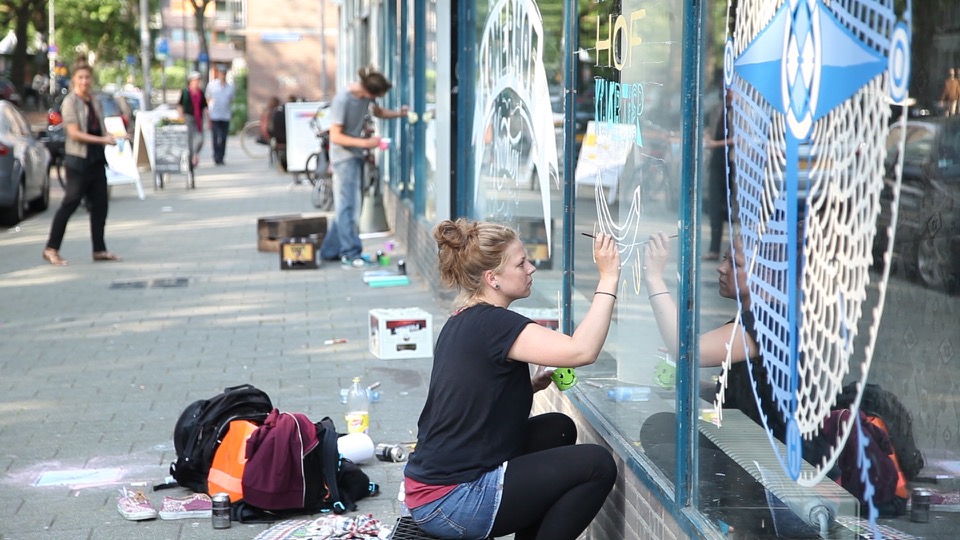
 Credit : 2014 ZOHO Placemaking plinth painting
| Country |
Netherlands |
| City |
Rotterdam |
| Name |
Stipo |
| Date |
NA |
| Description |
“STIPO” stands for Strategy, Innovation, Process development and Open-source. STIPO started at the University of Amsterdam in 1992. Their core values are long lasting quality, soul of the city, variation of functions, ownership of citizens and public quality. They work on urban development, co-creation and community-based urban development, area coalitions and setting up collaborative investment strategies, social and technological innovation, incubator strategy, cultural clusters and innovation districts, organic renewal, urban anthropology and urban psychology, social enterprise, public space and placemaking, child-friendly areas, vacant buildings and temporary use, tactical urbanism and long-term strategies, and The City at Eye Level. |
| Urban Co-Governance |
Moderate |
| Enabling State |
Moderate |
| Pooling |
Moderate |
| Experimentalism |
Moderate |
| Tech Justice |
Weak |
| Website |
Official website: www.stipo.nl
Networks: https://thecityateyelevel.com/about-stipo/; https://citiesintransition.eu/interview/stipo |
| References, sources, contact person(s) |
Website : www.stipo.nl
Contact : contact@stipo.nl |
rotterdam
by Chiara De Angelis | Jun 8, 2018
Image source : http://wijkcooperatie.org/?
| Country |
Netherlands |
| City |
Rotterdam |
| Name |
Afrikaanderwijk Cooperativa |
| Date |
2013 (birth of the cooperative form) |
| Object |
The Afrikaanderwijk Co-operative brings together existing workplaces, entrepreneurs, producers, social organizations and the market. They encourage sustainable local production, knowledge exchange, cultural development and entrepreneurship based on shared responsibility and participation. The goal is to make Rotterdam Zuid, and especially the Africa district, a stronger and more capitalier area with concerned residents and entrepreneurs. The Cooperative increases self-reliance and strengthens infrastructures. In this way they create opportunities to increase the self-organizing capacity of an area through the provision of labor, services and products while at the same time reducing waste of talent. |
| Urban Co-Governance |
Moderate |
| Enabling State |
Moderate |
| Pooling |
Strong |
| Experimentalism |
Moderate |
| Tech Justice |
Weak |
| Website |
http://wijkcooperatie.org/? |
| References, sources, contact person(s) |
Website
info@wijkcooperatie.org |
Gemaal op Zuid, Pretorialaan 141, 3072 EL Rotterdam

by Chiara De Angelis | Jun 8, 2018
Credits: Image from https://www.indiegogo.com/projects/urban-gardening-project-blpc-community-manila-philippines#/
| Country |
Philippines |
| City |
Manila |
| Name |
BLPC Urban Farm |
| Date |
2014 |
| Object |
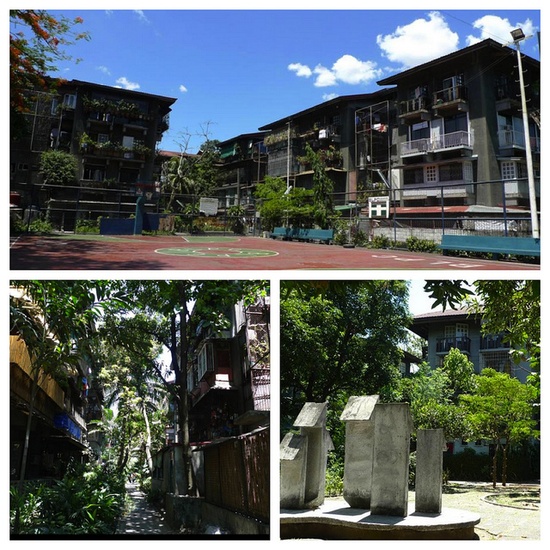
The Urban Gardening Project in Bagong Lipunan Pag-asa Condominium Community (BLPC Community) of Manila, Philippines is an initiative to transform unused urban land into a thriving urban farm and community space in Metro-Manila, Philippines.
The BLPC is a tight-knit community of 1,600 souls in some 500 plus apartments of four-story walk-up units, situated minutes away (by foot) from North EDSA SM-Shopping Mall, Trinoma, and the neighbouring rapid transit (MRT) station, in Quezon City, Metro-Manila. Built by the National Housing Authority (NHA) in the late 1970s, on what was then the edge of the city, the apartments have meanwhile been sold with just 30% still rented and it is now rather poorly maintained but has many mature trees – especially mangos.
The project intends to promote the growing of food crops on some 5,000 ft2 of underused parts of BLPC and in small gardens and on balconies to develop an exemplary urban farm and community open space. It is intended to grow fruit and vegetables organically and in time maybe even house livestock. This should demonstrate the possibilities to grow food in a densely urbanized area with limited resources and thence to inspire others to start growing (some of) their own food in the underutilized urban spaces, on balconies and roofs.
The rationale for the project is based on the premise that environment and community issues are closely interlinked and that one can be tackled with the aid of the other.
The aims of the Urban Farm are as follows:
- grow organic fruit, herbs and vegetables;
- compost kitchen waste;
- sell produce through a community grocery store or create a community farmers market or CSA initiative;
- host workshops to educate and expose city dwellers to the possibilities of urban farming and to train ‘urban farmers’;
- host workshops for street children in order to provide farming and business skills training and hire these to carry out some tasks;
- research, design and develop best practices for farming under the conditions of the site;
- serve as an outdoor community and activity space (such as yoga and dance classes) for building residents, street children and the neighbourhood as a whole;
- establish working arrangements between the land and building owners and their Association (BLPC), the street children as urban farm workers, managers, and food consumers, commercial marketing of the produce, and TCIP and the street children NGOs who will guide the project.
|
| Urban Co-Governance |
Strong |
| Enabling State |
Weak |
| Pooling |
Moderate |
| Experimentalism |
Strong |
| Tech Justice |
Weak |
| Project Website |
http://www.transitionph.org/urban-transition-metro-manila/ |
| References, sources, contact person(s) |
website
Contact : info@transitionph.org |
manila