by Staff | Apr 27, 2022
 Image source: https://lille.encommuns.org
| Country |
France |
| City |
Lille |
| Name |
Open Source Third Places and Assembly of the Commons |
| Date |
2019 |
| Description of the project |
The Assembly of the Commoms – Assemblée des communs in French – is a collective, a network of women and men who are interested in collaborative practices and collective initiatives called “the commons”. Their practices are based on welcoming contributory impulses, trusting, and transparency. They work with plenary meetings and freely organized workshops.
Concretely, working groups list the commons, build a space for meetings and exchanges, offer help, educate about The Commons, accompany the emergence of the commons in public debate… Every Assembly members can lead a workshop.
They use a dievrse open sources as a chat to dialogue, email lists for information, a Loomio for voting, a kanban for organizing tasks… |
| Urban Co-Governance |
Moderate |
| Enabling State |
Weak |
| Pooling |
Moderate |
| Experimentalism |
Moderate |
| Tech Justice |
Moderate |
| Project Website |
https://lille.encommuns.org/ |
| References, sources, contact person(s) |
Website ; various open source as https://www.communecter.org/#organization.detail.id.57750ad840bb4e661a6afe44
Contact : Facebook page https://www.facebook.com/groups/445343578990519/?fref=ts |
Lille

by Staff | Apr 26, 2022

Image source: http://www.fondazionelacasa.org/sostienici/
| Country |
Italy |
| City |
Padua |
| Name |
La Casa Onlus Foundation
|
| Date |
2001 |
| Description of the project |
La Casa Onlus Foundation was established on March 26, 2001, by order of C.C.I.A.A. of Padua, A.C.L.I. Provincials of Padua, Nuovo Villaggio social cooperative and Banca Popolare Etica. It is a non-profit participation Foundation which act as an interlocutor of the institutional subjects that make the necessary political choices for everyone to have a home, and as a concrete response to the new needs of people living in hardship. To pursue its objectives, La Casa Onlus Foundation promotes initiatives and projects, with the aim of helping to resolve the housing problems of Italian and foreign families residing in the territory, favoring their access to decent housing. In some projects, the role of La Casa Foundation is to inform the municipal administration of the availability of a vacated apartment to identify in rankings which subjects are best suitable to realize a real public service subsidiary to the public administration, a public service acted by a subject of a private nature (thus anticipating the third sector code).
The main objective of the participation foundation is to facilitate the insertion of families residing on the territory in the economic-productive fabric of the Veneto Region, promoting human growth and social integration. The Foundation is based in Padua and is present in 5 provinces, excluding Belluno and Vicenza. |
| Urban Co-Governance |
Strong |
| Enabling State |
Moderate |
| Pooling |
Moderate |
| Experimentalism |
Moderate |
| Tech Justice |
Weak |
| Project Website |
http://www.fondazionelacasa.org/ |
| References, sources, contact person(s) |
Source :
http://www.fondazionelacasa.org/wordpress/wp-content/uploads/2015/05/FLC-EN-report.pdf
Facebook page : https://www.facebook.com/FondazioneLaCasaOnlus/info
Case studyContact : info@fondazionelacasa.org |
Padua

by Staff | Apr 26, 2022
Image source: https://foreninger.uio.no/jussbuss
| Country |
Norway |
| City |
Oslo |
| Name |
Legal Aid Clinic |
| Date |
1971 |
| Description of the project |
Juss Bus started on a bus, a moving clinic to give free legal support. Initially, it was a research project, the clinic was informal: the founders had a bus and traveled around, they went to places where they thought there were people in need of legal aid. Thanks to their work on the field they published articles on legal sociology during the years. The goal is to help and inform social groups about legal aid and legal rights.
Today it is basically an office with 30 law students working in four groups of selected areas of law that are not covered by other organizations, namely immigration law, prison law, debt, and financial assistance, social law. The project is addressed to both people that have a problem with the law, and people who don’t know to have a problem.
The main office is in Oslo, but every week the students travel to cities all around the country doing outreach work. The project is located on the east side of Oslo. The center does produce politics working on three elements: legal aid, legal politics, and research. Students use this work to answer hearings and write in the media to give a perspective to the society. At the same time, students can also write their Master’s thesis in this area, their works are published as reports. It is a way for students to learn about the field, and also to see how it works in real life. |
| Urban Co-Governance |
Strong |
| Enabling State |
Moderate |
| Pooling |
Weak |
| Experimentalism |
Moderate |
| Tech Justice |
Weak |
| Project Website |
https://foreninger.uio.no/jussbuss/english/ |
| References, sources, contact person(s) |
Interview,
leder@jussbuss.no |
Oslo

by Staff | Apr 22, 2022
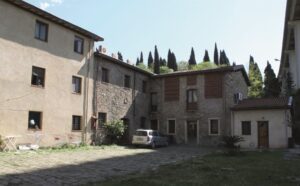
Image credit : https://www.fondazionecasalucca.it/portfolio/abitare-collaborativo-2/
| Country |
Italy |
| City |
Lucca |
| Name |
Abitare collaborativo (Fondazione Casa Lucca) |
| Date |
2007 |
| Description of the project |
Casa Lucca Foundation (FCL) was founded as a “Participation Foundation”, with the main purpose of dealing with the lack of housing. It was notably aimed at seeking the inclusion of the so-called “grey band” populated by precarious workers and families in difficulty who neither can stay in the private rental market, nor can buy a house, or who are not included in the restricted area of public social housing. This “grey band”also includes subjects in situations of marginalization, fragility or at risk of poverty, or people who have completed recovery paths or who have find themselves in social and health facilities and need a home for their new life. The aim of the project is to create ad hoc housing and community services,along with communities. Rankings are conceived by Municipalities to intercept the various needs and members in regards to intervention bands determined by the Home Offices.
Among the most recent projects, promoted by FCL, “Abitare Collaborativo” aims to recover and revitalize small rural and hilly villages offering concrete answers to the housing needs of the area for disadvantaged sections of the population. |
| Urban Co-Governance |
Strong |
| Enabling State |
Moderate |
| Pooling |
Moderate |
| Experimentalism |
Weak |
| Tech Justice |
Weak |
| Project Website |
https://www.fondazionecasalucca.it/portfolio/abitare-collaborativo-2/ |
| References, sources, contact person(s) |
Source : Case study
Contact :
|
Lucca