by Staff | Ago 24, 2023
 Images sources : https://www.uia-initiative.eu/en/uia-cities/lille
| Country |
France |
| City |
Lille |
| Name |
TAST’in FIVES |
| Date |
2017 |
| Description of the project |
At Fives, after the closure of the metallurgic “Fives Cail Babcock” company in 2001, an ambitious urban renovation project has started in 2015 in order to transform the 20 hectares of industrial brownfield into an original pattern of housing and activities.
A central food hall has been created and mix cooking, productive and food-services activities: A “ Community kitchen” inviting neighbourhood inhabitants to join workshops and events; a professional kitchen hosting an Incubator to food projects and solidary caterer for skills development; a food Court to meet and gather around sustainable local meals and festivals; an urban farm combining training for agricultural job and pedagogy for citizens.
The project was managed via a collective governance model involving all the partners. The design of the future Food hall was co-created with the local residents and participants to the activities.
The results of the first 2 years of the project (from sept 2017 to June 2019), located at L’Avant-Goût, are: 15 000 users of the site; 23 events for the general public; 120 000 visitors during the summer; 500 cooking workshops; more than 100 partners involved. |
| Urban Co-Governance |
|
| Enabling State |
|
| Pooling |
|
| Experimentalism |
|
| Tech Justice |
|
| Project Website |
https://www.uia-initiative.eu/en/uia-cities/lille |
| References, sources, contact person(s) |
https://www.uia-initiative.eu/en/uia-cities/lille , https://urbact.eu/tastin-fives,
https://www.soreli.fr/wp-content/uploads/2020/01/plaquette-fives-cail-uk.pdfContact : Cécilie Dagmey, project manager (Municipality of Lille), cdagmey@mairie-lille.fr |

by Staff | Ago 24, 2023

Image source: https://www.facebook.com/FaroVenezia/
| Country |
Italy |
| City |
Venice |
| Name |
Faro |
| Date |
2008 |
| Description of the project |
“Faro Venezia brings together a group of Venetian citizens who have activated a series of actions aimed at promoting the Faro Convention and encouraging its implementation.
We aim to raise awareness of the significance of cultural heritage for the quality of life through initiatives such as heritage walks, conferences, studies and research, training activities.
In particular, we intend to realize one of the founding assumptions of the Convention, which states that the cultural significance of buildings, public spaces and historical monuments, defining the territory on which the inhabitants develop relationships, habits, lifestyles, goes beyond the specific historical and artistic as recognizable elements of values, beliefs, imagination and therefore the identity of a community.”
(from https://farovenezia.org/about/) |
| Urban Co-Governance |
|
| Enabling State |
|
| Pooling |
|
| Experimentalism |
|
| Tech Justice |
|
| Project Website |
https://farovenezia.org/ |
| References, sources, contact person(s) |
Facebook page : https://www.facebook.com/FaroVenezia/ |
Venice

by benedictaquarcoo | Ago 2, 2023
| Location |
Beirut, Lebanon |
|
|
| Variable |
Summary of the qualitative description |
Coding |
|
| IV_1: Relation to the existing corrupted political class |
Beirut Madinati tries to develop independently from the existing corrupted political class. This is also a strength of the movement as it gives it legitimacy. |
Weak |
|
| DP_1 Collective Governance |
Beirut Madinati has a strong collective governance. It answers to the characteristics of “collaborative governance” involving citizens, private actors, and civil society organizations. |
Strong |
|
| DP_2 Enabling state |
Beirut Madinati has no official relation with the government. |
Weak |
|
| DP_3 Pooling economies |
The movement is working towards achieving the “right to the city”(H.Lefèbvre) and involving cross-sectorial actors. And involves users in the design process as shown with the “waste management coalition” that engaged both NGOs, political parties, and citizens. |
Strong |
|
| DP_4 Experimentalism |
they organize meetings, debates, exhibitions. Each event is announced on the Facebook page of Beirut Madinati, and a summary of it is also posted on the page afterward. It corresponds to a moderate experimentalism. |
Moderate. |
|
| DP_5 Tech justice |
lot remains to be done about digital infrastructure in Lebanon. In that matter, the information provided by Beirut madinati through social networks might not be accessible to every social stratum. |
Weak. |
|
| Outcome |
|
|
|
Beirut Madinati- BM Project- 2015-Make Beirut a more livable city + fight corruption – Waste Management-Policy making and Advocacy-http://beirutmadinati.com
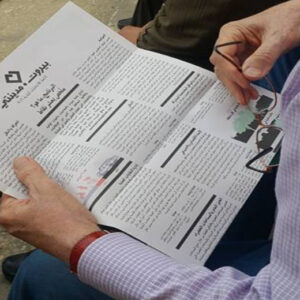
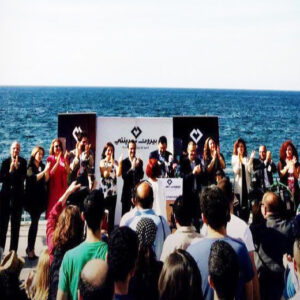
Photo Credits: https://beirutmadinati.com/

by benedictaquarcoo | Ago 2, 2023
| Criteria |
Material (interview & research) |
Coding reference |
Strength |
| Co- governance |
> workshop to brainstorm with all actors (similar to the cheap talking phase in Co-City protocol ?)
> They can work with Community Fundations, high school.
> Temporary events they would organize foster collaboration between private, public, and civic groups. Their goal is Co-Governance
> they managed to make families participating
> MKBT is a company/NGO
>They do training |
Collaborative governance: at least four actors of the quintuple helix are involved, but there is no relation of interdependence. Also, actions are at small scale. => Shift to Shared governance.
A3_1 Small scale and Shared governance (moderate)
|
2 |
| Enabling State |
> Actions they lead are impulsed by themselves : they observe a deprived space, think of different processes, then partner with local municipalities.
Local municipalities as Fagaras sometimes have a limited interest in these processes, they don’t want to give much time for engagement.
> they do advocay a lot concerning informal housing (they definitely tackle urban poverty)
> In Fagaras, MKBT convinced the municipality to form local action group against poverty, which would help for strategies of urban regeneration, help with finding funds…
> get regional grants |
They definitely try to collaborate with State. However officials are not always willing to collaborate, MKBT manage to build partnership, influence policies.
B1 Co-design (weak). The enabling state is a state that uses co-design as a tool for decision making and planning and hires service designers or design thinkers; |
1 |
| Poolism |
> Participatory mapping
> collective use of underused spaces |
The project does not develop a SE, but corresponds to “4) involves a transfer of resources from the private or public actor to the collective group; 5) aimed at realizing the goals of the right to the city”
C2b “commoning economy” (strong) |
3 |
| Experimentalism |
> Participatory mapping of space that are underused. See : Blog – Încredere în Făgăraș (incredereinfagaras.ro) and http://mkbt.ro/en/portfolio/incredere-in-fagaras/
> They organized temporary events to get the community involved
> they try to be recognised and fostered in the long term with protocol. + get inspiration from other protocols, especially the LabGov one. However, they are not that connected with other similar projects in Romania bc they are rare.
> Their actions depend of each context, of each public actors’ dynamic
> train people to different type of jobs linked to climate justice. |
The project would fit with : “D1. (moderate) The project adopts an innovative methodology for the provision of the service of public utility ; D2 adaptive (moderate) The project relies on a methodology or on a structure/process that is exportable and adaptable to different contexts”
It seems that connection at a regional/national/international level with similar projects is undergoing, so this features might, more than others, change in the future.
D1 [experimentalist] methodology & D2 adaptive (moderate) |
2 |
| Tech Justice |
> The mapping project is an advanced project concerning the use of technology.
> virtual museum
> The interviewed hasn’t told about the website, really well developed.
> however, communities they are working with do not use technology that much, so it’s not the most relevant tool.
> they do not use technology as a tool against urban poverty and do not form people about it, that’s why the interviewed seems mitigated. |
Eventhough MKBT fits with “E2c Self-organization of communities around those projects/initiatives” with the map, they do not work on Tech Justice.
E1 Tech Equality (weak).
|
1, 5 |
Fagaras-MKBT-2014-Urban Transition-Underused Spaces-Community Regeneration-MKBT, Romania-https://www.facebook.com/MakeBetterPlatform/?fref=ts


Photo credits: http://mkbt.ro/en/portfolio/incredere-in-fagaras/
https://www.google.com/search?q=fagaras+MKBT+project&rlz=1C1GCEA_enIT1035IT1035&oq=fagaras+MKBT+project&aqs=chrome..69i57j33i160l3.16190j1j7&sourceid=chrome&ie=UTF-8#vhid=q7is5HR3B4F1qM&vssid=l

by benedictaquarcoo | Lug 25, 2023
Source: https://www.atelierobservatoire.com/
| Location |
Laassilat, Bouskoura region, Morocco |
|
| Variable |
Centralized urban policy of Morocco |
|
| DP_1: Collective Governance |
According to the Helix system[1], we can analyze the situation of the Atelier de l’Observatoire:
1) Active citizens, commoners, social innovators, city makers, local communities. This dimension is surely completed, since the project has been created by two people from the local ground and has the ambition to integrate people as much as possible in its realizations.
2) Public authorities: Here we can underline the support of Minister of Culture, local cultural centers, the Regional Council of Human rights in Casablanca, several universities.
3) Private actors (national or local businesses; small and medium enterprises; social business): The Atelier de l’Observatoire has reached agreements with foundations in the private sector such as the swiss Drosos (…)[2] or the Arab fund for Arts and Culture (AFAC).
4) Civil society organizations and NGOs: The Atelier de l’Observatoire has a strong network with other civil society organizations, weather informal or formal agreement.
5) Knowledge institutions. ONU, European Union… Those well-known institutions are also supporting different projects of the Atelier de l’Observatoire.
Then we can analyse that this dependent variable is very strong, since all actors are united together around the Atelier de l’Observatoire, even if scales, amounts, time spent can be very different from one another. |
Strong |
| DP_2: Enabling State |
L’Atelier de l’Observatoire has the support of the Minister of culture itself, meaning a lot in the top-down approach of power in Morroco. But the state appears to be in the background, maybe only used for financial resources. The state may also occasionally lend public spaces facilitating collective actions such as exhibitions, which correspond a lot more to a collaborative project. The problem is that the initiative is not understood in this sense for local authorities and may appear as a counterpower. For those reasons, here we can think of a weak dependent variable for enabling state. |
Weak
|
| DP_3: Social Poolism |
Here we can see different neighborhood actors, creating a pooling economy around cultural and social thematic. The Social and Economic pooling is thus a strong dependent variable. |
Strong |
| DP_4: Experimentalism |
Different alternative approaches are experimented through diverse programs, with multiple forms: meetings, surveys, exhibitions, educational programs, preservation projects, production of works and publications. The Atelier de l’Observatoire has a very innovative projects, that enable a whole community to access to a new approach of cultural goods. In the case of the Curatorial program built by the Madrasa, it was a success in the Mediterranean regions, with other initiatives working in different countries. We can define this variable as Moderate. |
Moderate |
| DP_5: Tech justice |
The potential of digital infrastructures and access to technology to facilitate collaboration does not seem to be taken into account in the different projects of the Atelier de l’Observatoire. Here we have a weak dependent variable for the tech justice. |
Weak |
Casablanca-Atelier de l’Observatoire-2012-Research, Art & Culture- Atelier de l’Observatoire, Laassilat, Bouskoura region-https://www.atelierobservatoire.com/