
| Location | Beirut, Lebanon | ||
| Variable | Summary of the qualitative description | Coding | |
| IV_1: Relation to the existing corrupted political class | Beirut Madinati tries to develop independently from the existing corrupted political class. This is also a strength of the movement as it gives it legitimacy. | Weak | |
| DP_1 Collective Governance | Beirut Madinati has a strong collective governance. It answers to the characteristics of “collaborative governance” involving citizens, private actors, and civil society organizations. | Strong | |
| DP_2 Enabling state | Beirut Madinati has no official relation with the government. | Weak | |
| DP_3 Pooling economies | The movement is working towards achieving the “right to the city”(H.Lefèbvre) and involving cross-sectorial actors. And involves users in the design process as shown with the “waste management coalition” that engaged both NGOs, political parties, and citizens. | Strong | |
| DP_4 Experimentalism | they organize meetings, debates, exhibitions. Each event is announced on the Facebook page of Beirut Madinati, and a summary of it is also posted on the page afterward. It corresponds to a moderate experimentalism. | Moderate. | |
| DP_5 Tech justice | lot remains to be done about digital infrastructure in Lebanon. In that matter, the information provided by Beirut madinati through social networks might not be accessible to every social stratum. | Weak. | |
| Outcome |
Beirut Madinati- BM Project- 2015-Make Beirut a more livable city + fight corruption – Waste Management-Policy making and Advocacy-http://beirutmadinati.com
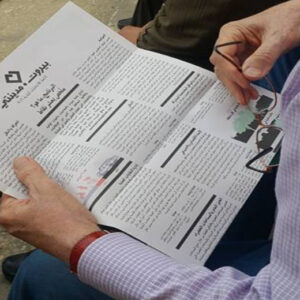
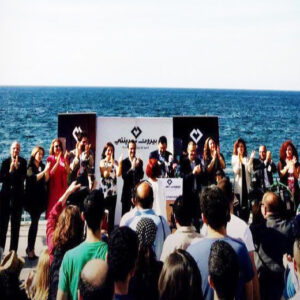
Photo Credits: https://beirutmadinati.com/