by Cosima Malandrino | Giu 8, 2018
Source: http://www.wepush.org/
| Country |
Italy |
| City |
Palermo |
| Name |
Push |
| Date |
2013 |
| Description |
PUSH is a design lab for social innovation.
Using a human-centered approach we develop solutions to improve the quality of life in cities and protect the environment. Through counseling and partnerships with local communities, public administrations and organizations PUSH uses service design methodologies in order to fosters innovative solutions in order for cities to work more efficiently, to be more just and more sustainable.
Their activity is centered on three fields: Applied Research, Design consulting, acceleration of ideas. PUSH also partners with World Urban Campaign, UN Global Compact and Code for Europe, and organized an Urban Thinkers Campus in Palermo to discuss the future of the city through the framework of the New Urban Agenda. |
| Urban Co-Governance |
|
| Enabling State |
|
| Pooling |
|
| Experimentalism |
|
| Tech Justice |
|
| Website |
http://www.wepush.org/ |
| References, sources, contact person(s) |
PUSH Website,http://www.wepush.org/
Right to the Future http://utc.wepush.org/
Contact : info@wepush.org |
Palermo

by Cosima Malandrino | Giu 8, 2018

Source: Screenshot 2022-05-06 https://www.southbronxunite.org/community-land-trust
| Country |
United States |
| City |
New York City |
| Name |
Mott Haven and Port Morris CLT |
| Date |
2016 |
| Description |
The community land trust (CLT) seeks to put into practice what South Bronx Unite has been pushing the state and city to do since 2012: involve the community in the development of public spaces and let Bronx residents have a say in what happens to their neighborhood.The CLT is indeed a tool to strike back against decades of environmental abuse in the area that’s been brought on by power plants, waste transfer stations, and companies like FreshDirect whose new distribution plant, Dissent Magazine notes, will add 1,000 truck trips per day to an area already choked with air pollution.
The Community Land Trust, a nonprofit where a group of people own and manage land, will help to empower residents of Mott Haven and Port Morris to have a say in the use of the neighborhoods’ underutilized space.
If the organization has already formed the Community Land Trust, it has yet to acquire any properties—however, it has its eyes on two city-owned vacant sites. Under the CLT, development on sites it owns would have to be led or approved by members of the trust.
Finally, the Mott Haven-Port Morris Community Land Trust has sought to put pressure on real-estate interests entering the neighborhood (including Somerset Partners, Carnegie Management, and Savanna) with their Statement of Principles for Private Development. The statement addresses eight points: jobs, housing, environmental justice, community art, community cohesiveness, local economic development, health equity, and public-private projects. It notably calls on private developers to support the Waterfront Plan, a community-designed plan to provide public green space and waterfront access to Bronx residents. |
| Urban Co-Governance |
Weak |
| Enabling State |
Moderate |
| Pooling |
Weak |
| Experimentalism |
Weak |
| Tech Justice |
Weak |
| Project Website |
https://www.southbronxunite.org/community-land-trust |
| References, sources, contact person(s) |
Zoe Rosenberg,”These award-winning proposals will tackle the city’s public space inequity”, Curbed New York, 2017
Raven Rakia, “Who Benefits from Public Land in the Bronx?” Dissent Magazine, 2016
Contact : info@southbronxunite.org |
New York City
by Cosima Malandrino | Giu 8, 2018
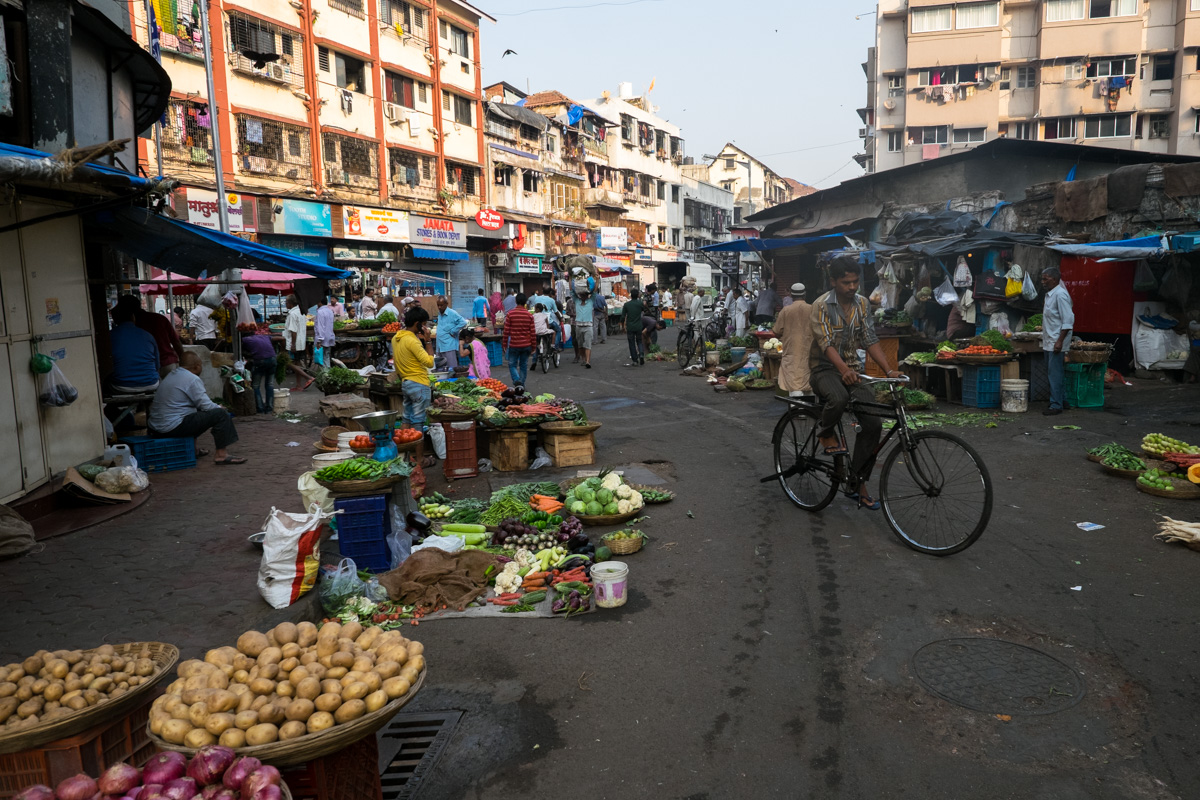
Source: Our Life Unfolded, http://www.ourlifeunfolded.com/2015/04/20/big-pictures-mumbai/
Date
| Country |
India |
| City |
Mumbai |
| Name |
Commoning public spaces |
| Date |
2015 |
| Description |
Parthasarathy argues that Bombay / Mumbai represent an interesting case for the study of cities as a commons. Its paper focuses on the ways in which public spaces are commoned permanently and temporarily by different classes of people and new common places come to be created initially to cater to specific ethnic groups. Analyzing the relationships between formal, informal, economic, political, and religious actors as a result of different commoning practices, the author concludes by defining Mumbai as symbolic public good. “In many ways for rural elites and poor, for the upper castes and the lower castes the city is not just a place which offers an alternate livelihood, and a source for income generation, the city constitutes a symbolic public good.” Different practices have developed each arising from the very religiously diverse, migrant, and economically unequal population. Religious festivals and the occupation of public spaces for weeks represent a peculiar example of commoning which also ends up excluding and claiming space for a specific group, other than providing an opportunity for political elites and capital investments. Informal workers and street markets are also another example of commoning. “ For the aspiring small scale and informal entrepreneurs, and those seeking to own income generating assets – taxis, light commercial vehicles, small manufacturing equipment, and small retail – Mumbai has a large and efficient fiduciary network consisting of credit cooperatives, and cooperative banks which offer easy finance. This is the symbolic financial commons that the urban migrant poor and lower classes depend on.”
But the author draws an interesting conclusion: commoning as a way of bringing the multitudes together, as diverse as they may be.
“As with the ritual, cultural, and political commons, and the temporal commons that are the site for informal sector workers, symbolic public goods as commons bring together rich and poor, the powerful and those seeking empowerment, into shared strategies of commoning the city. “ |
| Urban Co-Governance |
Moderate |
| Enabling State |
Weak |
| Pooling |
Moderate |
| Experimentalism |
Strong |
| Tech Justice |
Weak |
| Project Website |
https://www.academia.edu/22238747/Aamchi_Mumbai_Capital_Commons_and_the_City_zen |
| References, sources, contact person(s) |
D.Parthasarathy, “Aamchi Mumbai: Capital, Commons, and the City(zen)”, 2015, Indian Institute of Technology Bombay
Contact : dp@hss.iitb.ac.in |
Mumbai

by Cosima Malandrino | Giu 8, 2018
 Source: Accorderies, http://jesoutiens.accorderie.fr/rejoignez-la-communaute/projects/205
| Country |
France |
| City |
Montpellier |
| Name |
Accorderie |
| Date |
2013 |
| Description of the project |
Inspired by the Accorderie Network that was born in Québec in 2002, the Accorderie of Montpellier was established in 2013 by active citizens reunited in an association called “ Collectif Montpelliérain Pour Une Accorderie Et D’autres Solidarités Réciproques (COMASOR)”. As part of a wider program to transfer the accorderie model in France, the Montpellier accorderie was supported by the Foundation Macif and officially entered the French Accorderie Network in 2014.
The Accorderie model is established on the principle of mutual cooperation and service exchange within neighborhood communities without using financial means. Concretely, this means that a member can dedicate an hour to the accorderie by completing a service (ie. english lessons, fixing computers, gardening), getting as a consequence an hour of credit that he can use by benefiting from a service done by another member. |
| Urban Co-Governance |
Moderate |
| Enabling State |
Moderate |
| Pooling |
Moderate |
| Experimentalism |
Moderate |
| Tech Justice |
N/A |
| Project Website |
http://www.accorderie.fr/montpellier/page-d-exemple/ |
| References, sources, contact person(s) |
Accorderies Montpellier. Source: Website http://www.accorderie.fr/montpellier/page-d-exemple/
Contact : montpellier@accorderie.fr |
14 rue Durand 34000, Montpellier

by Cosima Malandrino | Giu 8, 2018
 Image source: https://www.villaggiobarona.it/progetto/
| Country |
Italy |
| City |
Milan |
| Name |
Villaggio Barona |
| Date |
2003 |
| Description of the project |
The Villaggio Barona was born thanks to a partnership between the Attilio and Teresa Cassoni Foundation, a local voluntary association (Associazione Sviluppo e Promozione) and the S.S Nazaro and Celso Church.
In order to bring together the community and involve it in the process of urban regeneration of the area owned by the Attilio and Teresa Cassoni Foundation, the inhabitants have been called to participate in the co-designing process. Thus, they have contributed to design the area that had been closed off for many years thanks to a series of meetings, public events and celebrations.
The Project envisaged initiatives of personal support (targeted to the elderly, children, disabled people, immigrants etc.), social housing (82 units with 4 levels of rent depending on need), commercial activities, a public park, and a social housing building for retirees, students, hostelers, and disadvantaged individuals. |
| Urban Co-Governance |
Moderate |
| Enabling State |
Moderate |
| Pooling |
Moderate |
| Experimentalism |
Weak |
| Tech Justice |
N/A |
| Project Website |
http://www.villaggiobarona.it/progetto/ |
| References, sources, contact person(s) |
http://www.villaggiobarona.it/progetto/
Contact : segreteria@fondazionecassoni.org and gianluca.nardone@fondazionecassoni.org |
Milan