

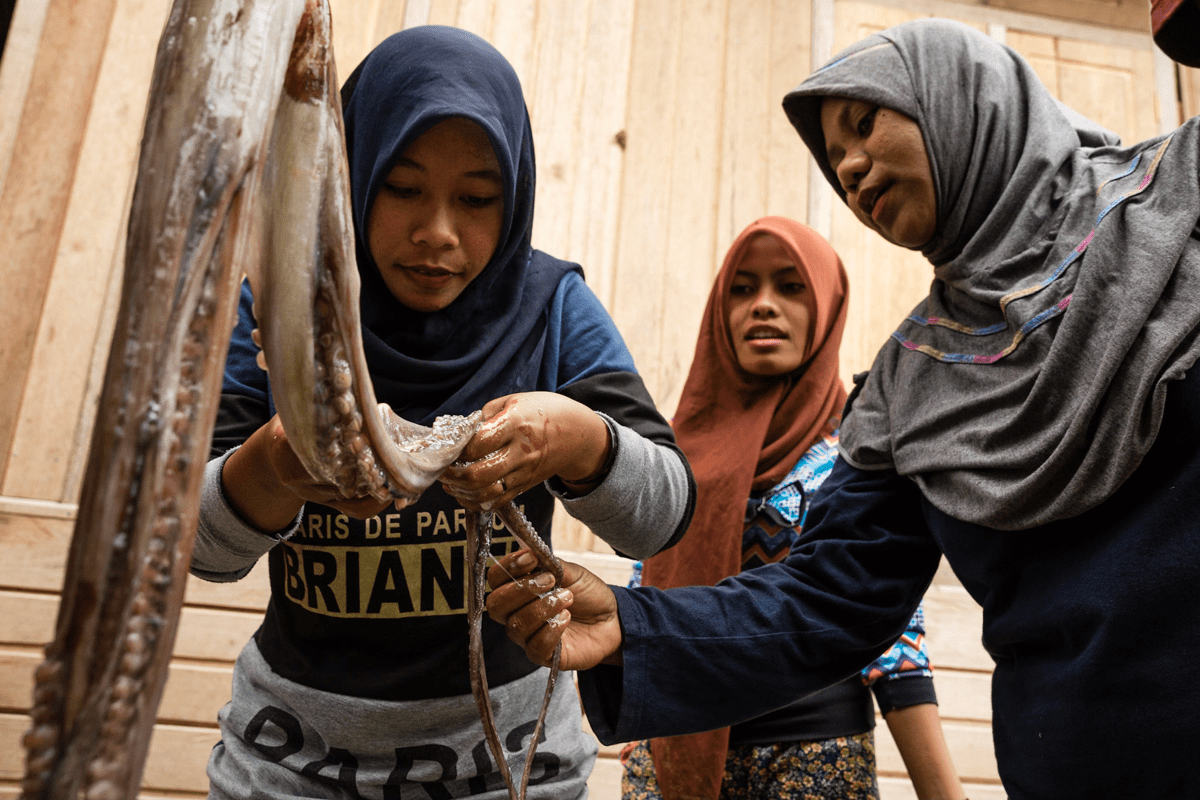
Photo Source: https://careers.blueventures.org/locations/kenya
Summary Table and Coding Grid
| Location | |||
| Variable | Summary of the qualitative description | Coding | |
| DP_1 Collective Governance | 1) Active citizens, commoners, social innovators, city makers, and local communities. This dimension is complete since members have fully embraced the idea. The county still ensures that a more significant portion of the populace partakes in the project. The project uses community groups as a way or platform to enter the communities and reach individuals. Still, the project’s impact is measured individually: how changes are brought to household levels. 2) Public authorities: The government is also involved since it has to collaborate with the relevant ministries to provide expertise and share data with them. Therefore, there is a lot of collaboration with civil society, the private sector, and the government. 3) Private actors (national or local businesses; small and medium enterprises; social business): The private sector will accelerate the speed of this project, yet their involvement is minimal. 4) Civil society organisations and NGOs: There is strong collaboration among civil society organisations. The organisation (Blue Ventures) designs projects, and when it comes to the actual implementation of the projects at the village level, the organisation partners with civil society organisations, which could also include community-based organisations for the implementation. On the part of the private sector, for this particular project involving fishermen, they collaborate with the private sector in term of marketing. 5) Knowledge institutions: The project is not very much engaged with schools and other educational institutions. | Moderate | 2 |
| DP_2 Enabling state | Enabling state facilitates collective actions for the commons. In the case of the Blue Ventures Project, the government does not give enough financial support but supports through ideas and ensuring that local members understand and buy the project. There is an actual degree of openness, participation, collaboration, and cooperation from day one until the end of the project. As mentioned earlier. The community is the targeted group, although the project’s impact is assessed on an individual household basis. The role of the government in this project is to give its expertise through the relevant ministries, and in return, the project shares data with those ministries. This support is ideological and human, not financial, so we can say that this design principle is moderate. | Moderate | 2 |
| DP_3 Pooling economies | The Blue Ventures project does not receive any external funding from the government, citizens, or other NGOs, nor does it receive any form of profit. The organisation solely funds the project. Therefore, the variable is rated as Moderate. | Moderate | 2 |
| DP_4 Experimentalism | The Blue Ventures Project has launched many experimental approaches, which have been replicated in other parts of East Africa, East Asia, West, and South America. This is rated as Strong. | Strong | 3 |
| DP_5 Tech justice | Tech Equality is considered Weak as the project has a pathway for assessing how its members use mobile networks to access financial services[NO1] . Currently, the digital online tool used in the project is digital finance through mobile networks. Therefore, the project uses digital online tools but Eco Credit has not reached the stage of accessing financial services through mobile networks. Regarding the issue of privacy and data, the project shares data with the relevant Ministries, like the Ministry of Gender and the Ministry of Fisheries. | Weak | 1 |
| Outcome |